How a Comedy Callback Makes an Earlier Joke Feel New
Learn how a comedy callback turns an earlier detail into a fresh joke, with clear ways to choose, plant and revise returns that reward audience memory.
A comedy callback works when an earlier detail returns in a changed situation. The audience recognises it, recalls its first meaning and sees what the new context has done to it.
A callback is more than repetition. It might bring back a phrase, an object, a habit or a choice. For the return to feel comic, the detail must still be recognisable, but something around it must have changed.
What makes a comedy callback funny?
Think of a callback as a conversation between two moments. The first introduces a memorable detail; the later moment answers it. Comedy can come from contradiction, consequence or a change in who uses the detail.
Suppose a character boasts that they can handle any crisis. Later, the same character repeats the boast while struggling with a trivial problem. The words have not changed, but the situation has made them sound absurd.
Repetition without a new turn can feel like a request to laugh twice at the same joke. A useful return reveals something, changes the detail’s status or makes the first moment look different in retrospect.
Which kind of comedy callback suits the scene?
A direct verbal return offers clear recognition. A running pattern builds expectation through variation. A closing callback can connect the ending to an earlier idea. These approaches can overlap, but decide what the return should contribute before you draft it.
When does a direct verbal callback work?
A direct verbal callback repeats a distinctive phrase, name or verbal habit. It suits dialogue-led comedy because the audience can recognise the wording quickly, especially if a different character uses it or the situation gives it a new meaning.
Imagine a fictional office scene where a manager calls every delay “a temporary victory for chaos”. Later, a usually calm colleague says the phrase when a printer jams during a presentation. The words are familiar, but the new speaker makes the manager’s private expression sound like office-wide shorthand.
How can a running pattern stay fresh?
A running pattern repeats a kind of joke rather than one exact line. A character might misread formal instructions, with each return revealing a different consequence or changing who has to deal with the mistake.
Vary the pattern’s outcome or point of view. If the audience can predict both the cue and the punchline, give the next return a new consequence—or stop the pattern before it becomes routine.
When should a callback close a scene?
A closing callback can make an ending feel connected to an earlier moment. It earns that place when the returning detail settles, complicates or overturns an idea introduced before.
Imagine a fictional sketch that begins with someone reserving a chair for “the emergency expert”. At the end, the expert arrives and admits they have no idea what to do. The phrase now carries the group’s misplaced confidence, rather than simply repeating an earlier line.
How do you plant a callback without announcing it?
Give the audience a reason to notice the first appearance: unusual wording, a strong reaction or a revealing habit. Then let the scene move on. Explaining the detail or immediately repeating it can make the setup feel overemphasised.
Keep the first appearance clear, but do not force every joke to become important later. A return can come in the next exchange if the context has already shifted. A longer gap can work too, provided the detail remains recognisable.
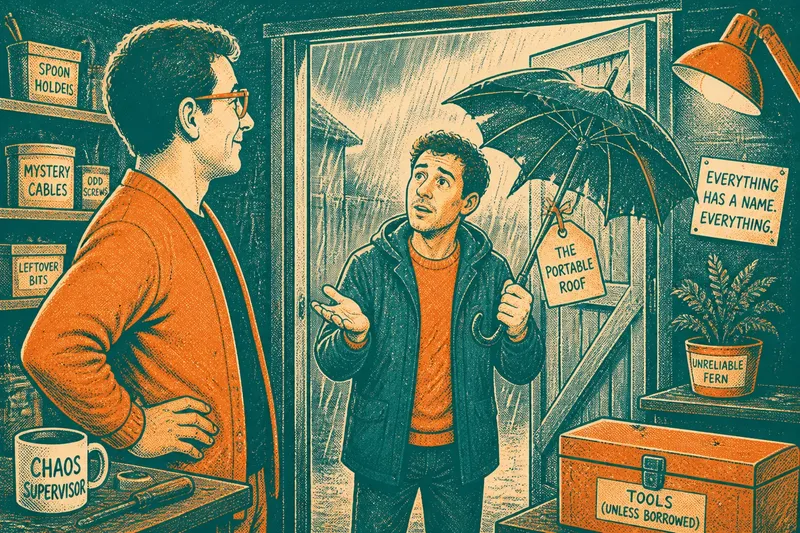
Imagine you are writing a short scene about a neighbour who labels every household object. The neighbour calls a broken umbrella “the portable roof”. Later, another character carries it into a leaky shed and asks for the portable roof. The phrase returns naturally, while its new setting gives it a practical, slightly ridiculous meaning.
How can you tell whether a callback is earned?
Before keeping a return, check what the audience can recognise, what has changed and whether the moment makes sense for the characters. Use the result to decide whether to keep, revise or cut it.
- If the returning phrase or image is recognisable, keep it; if not, restore a distinctive detail from the first appearance or choose a clearer callback.
- If the context gives the detail a new meaning, keep the turn; if nothing has changed, alter the speaker or consequence, or cut the repetition.
- If the character would plausibly use or encounter the detail, keep the return; if it requires an awkward detour, revise the scene or remove it.
- If a viewer can follow the new moment without remembering the first joke, keep its basic logic clear; if not, add the missing context or make the situation easier to understand.
- If the return strengthens the scene’s ending, keep it; if it competes with a clearer ending, move it earlier or cut it.
- If the callback adds a fresh comic turn, keep it; if recognition is its only pleasure, vary the detail or let the original joke stand alone.
It is not worth the effort to build a contrived detour around a detail merely because you want it to return. Some jokes work once and need no second life.
How does a callback differ from other repetition?
A repeated joke uses the same comic engine again. A running gag repeats a type of situation or behaviour, while a callback brings an earlier detail into a changed context. A running gag can contain callbacks, but the terms do not mean the same thing.
An echo is subtler: it may repeat an image, rhythm or choice of words without directly returning to the original joke. An explicit reminder is different again. If a character says, “Remember when I called this a temporary victory for chaos?”, the dialogue explains the connection instead of letting the audience recognise it for themselves.
What should you do if a comedy callback does not land?
Does a callback need to repeat the exact words?
No. A familiar image, habit or phrase can carry the recognition. Keep enough of the original detail for the connection to register, then change the context.
How long should you wait before bringing a joke back?
There is no fixed interval. Bring it back when the new situation gives it a different meaning and the audience can still recognise its source.
Can a callback work if someone misses the first joke?
Yes, if the new moment still makes sense on its own. The returning detail can offer an extra layer of recognition without making the scene’s basic action hard to follow.
Should every early joke return later?
No. A callback should serve the scene, not turn every line into a setup. Leave an earlier joke alone when a return would feel forced or distract from the ending.
When revising a comedy callback, read the first appearance and its return together. If the detail is recognisable, the new context changes its meaning and the character’s behaviour still feels plausible, the return is doing more than repeating a joke.