Before the Laugh Track: Comedy in the Radio Imagination
Radio comedy invites listeners to build a scene from voices and sound cues, revealing how imagined details can sharpen timing, character and a joke.
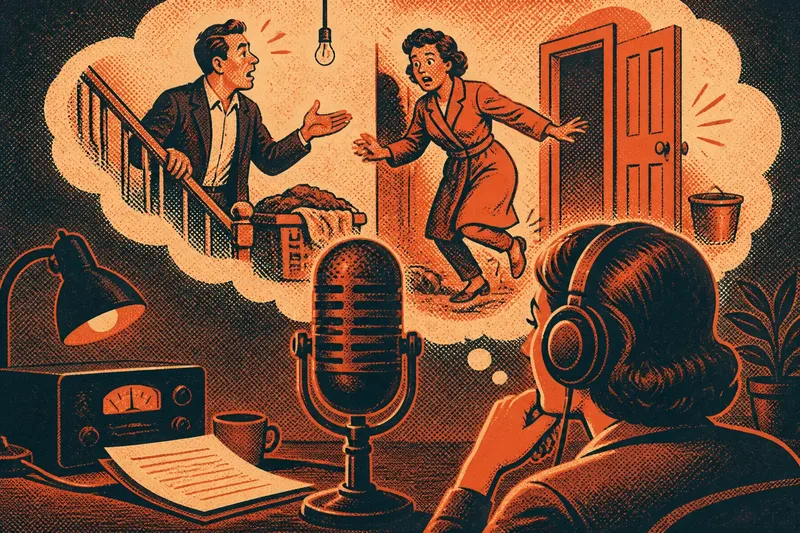
Radio comedy can make a single door sound like the start of a disaster. In a radio comedy scene, a creak, a hurried voice and a pause may leave listeners imagining more than a detailed description could. The pleasure lies in hearing how performers guide that private picture while leaving room for listeners to complete it.
How does radio comedy make a place audible?
A radio scene gives clues rather than scenery. One voice sounds close and private; another calls from what seems like across a hall. Footsteps cross a floor, a door creaks, or traffic passes behind the dialogue. Together, these cues suggest where the speakers are and how they relate to one another.
Familiar sounds carry useful associations. A muffled voice suggests someone behind a door, while an echo can make a room seem large or bare. Listeners need not imagine identical walls or furniture. They need only enough of a setting to understand what the characters are doing.
Comedy often comes from a sound contradicting a claim. A character may insist that a room is perfectly quiet as distant hammering continues. Listen for the gap between what the speaker says and what the sound makes difficult to believe.
What can a voice reveal without a face?
On radio, pace, pitch, emphasis and pauses carry information a face or gesture might convey on stage. A quick, clipped reply may suggest impatience; a polished voice that stays smooth while events grow chaotic can become absurd. The words may remain ordinary while the delivery changes their meaning.
Distance also shapes the scene. A voice fading away implies someone leaving; a sudden close voice can make a private remark feel uncomfortably direct. Listeners follow movement and mood through sound rather than sight.
Distinctive voices help separate characters, but broad caricature is not essential. A steady difference in rhythm or diction may be enough to identify who has joined the conversation. That restraint gives the dialogue space to carry the joke.
When does a sound cue become part of the joke?
A cue matters when it changes what listeners understand. A knock can cut off a boast; a ringing phone can expose that nobody wants to answer; a scraping chair can make an awkward departure audible. These sounds are comic events, not decoration.
Timing determines their effect. A cue just after a character claims to have everything under control can puncture the claim. Arriving too soon, it may have no clear connection to the boast. The sequence—claim, pause, interruption—lets listeners recognise the joke and imagine its physical details.
Silence has its own timing. A pause after an unexpected remark lets it land; an empty beat can make a character’s failure to respond funnier than another line. But if nothing has established why nobody speaks, silence may sound like a technical gap rather than a choice.
How much description helps listeners picture the action?
Dialogue can orient listeners, but too much turns a scene into an explanation. Characters need not narrate obvious actions. Description sounds more natural when someone has a reason to speak: giving directions, complaining about a view, or explaining a mess to a late arrival.
What a character notices can sketch both setting and personality. A fussy speaker might name every object in a disordered room; a distracted one might notice only the missing kettle. The contrast gives listeners a picture while showing what each person cares about.
Say two fictional neighbours are in a shared stairwell during a power cut. One insists the landing is easy to cross; the other counts each step and keeps bumping into a laundry basket. A scrape, a cautious voice and their disagreement let listeners assemble the place and mishap without a spoken inventory of the walls and furniture.
What do listeners gain by filling in the scene?
Radio comedy leaves optional details unresolved. Two listeners may imagine different kitchens, streets or faces and still understand the same joke. The performance supplies the essential relationships: who is speaking, what has changed and why a reaction is out of proportion.
That openness is not the same as vagueness. If listeners cannot tell whether a sound comes from the room or a character, the confusion may obscure the joke. The colour of a coat can remain private; who has just entered needs a clearer cue.
Extra sound effects are not worth adding when listeners already understand the action. Over-signalling can crowd out dialogue and leave less space for the audience’s own imagined details.
What questions help listeners appreciate radio comedy?
Why can a small sound be funnier than a description?
A sound can interrupt a character at exactly the wrong moment, making timing part of the joke. It also lets listeners infer an action without pausing the dialogue for an explanation.
Does radio comedy need a narrator?
No. Dialogue and sound cues can establish a location or move a story along. Narration helps when it supplies information characters would have no natural reason to say.
How can listeners follow several speakers?
Consistent vocal rhythms, phrasing and position in the sound field help distinguish speakers. Clear conversational turns matter too, especially when characters interrupt or talk over one another.
Why do pauses matter in radio comedy?
A pause gives listeners time to interpret a remark or anticipate a response. Used deliberately, it makes hesitation, disbelief or an absent reply audible without spelling out the emotion.
Which details make an imagined setting clear?
Effective cues add information rather than repeat it. A distant voice, footsteps moving towards it and a door opening can establish an arrival more economically than several explanatory lines. As you listen, notice whether each sound changes what you understand about the scene.
That economy lets radio comedy shift from an intimate exchange to broad imagined action with only a few voices and sounds. Listen for what the performers state, what they imply, and what they leave you to picture. The gap between those three things is often where the joke lives.